
Building engineering culture across borders
Practical lessons on communication, feedback and collaboration when Dutch and Kosovar developers work as one engineering team.

By Rens Gerritsen, Founder · tre plus
Rens Gerritsen is founder of tre plus and has experience building and connecting software and engineering teams between the Netherlands and Kosovo.
Mar 2026 · updated Sep 2026
Building an engineering team across borders does not start with a tool or an org chart. It starts with how people understand each other when context, habits and expectations are not automatically shared.
For Dutch teams working with developers in Kosovo, that distinction matters. The technical work can be strong while the collaboration still feels awkward if a short message is read differently than it was intended. This is not a problem that belongs to one culture. It is a reason to make the way of working more explicit.
Directness is not the same as clarity
Dutch communication is often explicit and direct. That can help a team get to the point, but it does not mean the intention is interpreted identically. Hierarchy, context, trust and psychological safety all shape how someone receives a question or a critical comment.
We therefore avoid reducing Dutch or Kosovar colleagues to fixed cultural traits. We look at the conversation in front of us. Does the other person know what is needed? Is there room to ask a follow-up question? And does it feel safe to say that something is unclear?
Make expectations explicit
Teams get stronger when expectations do not stay between the lines. Who owns a part of the work? When is something done? When should someone escalate? What happens when a deadline is not realistic? And is it safe to disagree with a decision?
We bring those questions into the open and record the agreements in the backlog, pull requests and team rituals. Asking questions early is part of that agreement. A question at the start of a sprint takes less time than a wrong assumption at the end.
Build one team, not two locations
An integrated team works from the same stand-ups, backlog, tooling and repositories. The product is not built by a Dutch half and a Kosovar half. Everyone sees the same priorities, follows the same development rituals and speaks directly with the people who know the product.
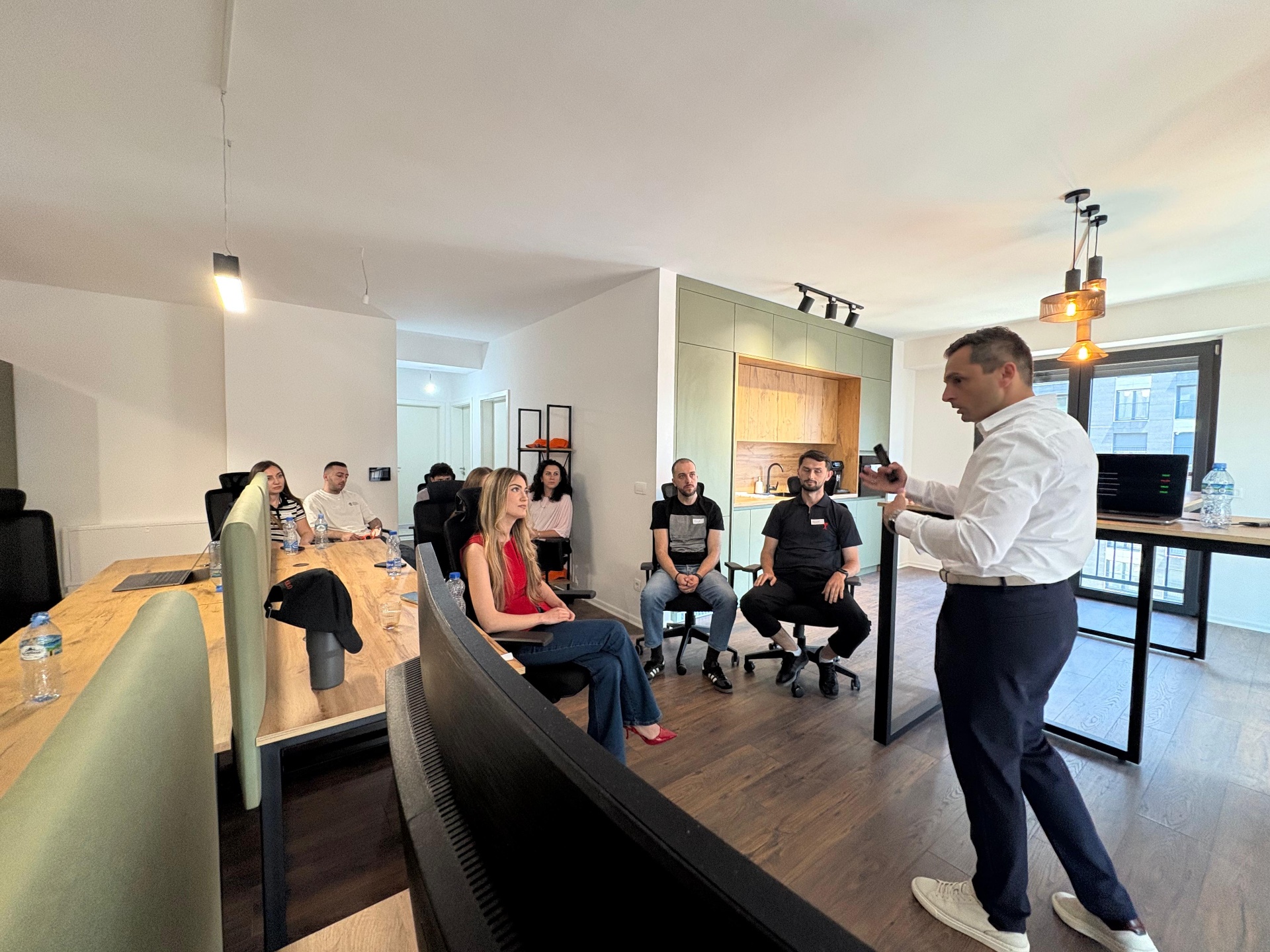
At tre plus, developers work from our own office in Pristina and join our clients' teams as part of the daily work. Coordination is Dutch-led, while the developers are employed locally by tre plus. The shared European working day makes real-time collaboration practical, but shared responsibility is what makes it one team.
Feedback must work both ways
Silence is not automatically agreement. In a cross-border team, feedback therefore needs to be invited. We ask follow-up questions in reviews and retrospectives, and make room for a developer who sees a risk or a better approach.
That only works when feedback goes both ways. Dutch colleagues can explain what they need. Kosovar colleagues can say when an agreement does not work or a decision could be better. A follow-up question is not a sign that someone was not paying attention. It is often what makes the conversation clearer.
What we learned in Kosovo
From our own office in Pristina, we see every day that good collaboration does not come from removing cultural differences. It comes from speaking often enough to build trust, and from making agreements visible and discussable.
The developers we work with are employed locally by tre plus and join long-term client teams. They learn not only the codebase, but also how a product team makes decisions. In-person meetings help, but doing the daily work together is the real foundation.
Nearshore collaboration in practice
Nearshore collaboration works best when a developer is not a separate outpost, but becomes part of your own nearshore team and contributes to the same roadmap. For one role, adding one dedicated developer to your team can be a sensible start. When several roles share responsibility, a Team as a Service setup can be the better fit.
Engineering culture is not a statement on a wall. You build it in how you set expectations, respond to disagreement and make people part of the same team. That work does not stop at the border. It is where the quality of the collaboration becomes visible.


Want a developer who really thinks along with your team.
Book a 30-minute call. No strings attached, just see if it clicks.

RensFounder of tre plus